
By: Sophie Kasakove | nola.com | August 16, 2026
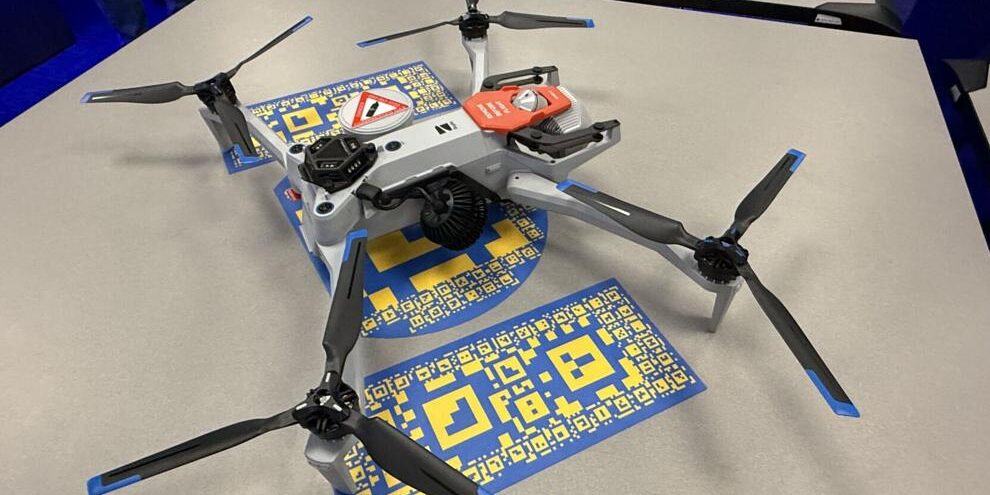
The New Orleans Police & Justice Foundation, a police booster organization, has committed to providing $500,000 to purchase an additional three emergency-response drones for the New Orleans Police Department, allowing the program to expand more quickly than previously known.
The funding supplements $250,000 allocated by the French Quarter Management District in March for a single remote-piloted police drone and docking station that can respond to 911 calls in the historic neighborhood.
Foundation spokesperson Matthew Stone said the funding will support deployment of three drones, mostly in and around the French Quarter. But he said they could also be used in other parts of the city and that the foundation is seeking more donors.
The technology has the potential to serve “as a force multiplier” given the NOPD’s staffing issues, according to Michael Harrison, the city’s deputy mayor for public safety, and will let commanders deploy officers and other public-safety officials more efficiently.
“NOPD could dispatch drones to quickly assess a situation,” Harrison said in a prepared statement Friday, “allowing officers to receive information more quickly, potentially saving valuable time and allowing police resources to be focused where they are most needed.”
New Orleans police were told about the additional money in January after the FQMD declined to provide their full request for $740,000, foundation leaders said. The donation wasn’t publicly announced, but it represents a boon for department leaders who’ve said it will help them respond more quickly to dangerous incidents.
They are hoping to launch the first French Quarter drone in the coming months and want to expand what’s known as the Drone as First Responder Program in a fashion similar to the recent deployment in Jefferson Parish.
To ACLU Louisiana and Eye on Surveillance, advocacy groups that have worked to halt the program and put guardrails around it in recent months, the expanded funding adds to concerns that the program will operate without enough public scrutiny.
“They have to be held accountable,” said Sarah Whittington, advocacy director of the ACLU of Louisiana.
Meanwhile, public safety groups like the Metropolitan Crime Commission and the NOLA Coalition, an advocacy group focused on crime and quality-of-life issues, have said the drone technology, deployed properly, can help offset NOPD staffing shortages.
“When the city is struggling to hire more officers and find funding for more officers. … you don’t pay overtime to drones,” said Rafael Goyeneche, president of the New Orleans Metropolitan Crime Commission. “At some point the police department is not going to be able to do more with less.”
Expanded funding
New Orleans police publicly proposed the program in January and sought $740,000 from the FQMD to purchase up to four drones. It came after Jefferson Parish purchased a fleet of 23 first responder drones last year that have been deployed to emergencies, and as part of a broader push in other parts of the U.S.
Cities in New York, Arizona, California and several other states have incorporated drones during emergencies, using them to evaluate whether 911 calls are legitimate before dedicating manpower, and giving officers information to enter an emergency situation safely.
After FQMD board members decided to fund the purchase of one drone at a meeting in early March, 8th District Captain Samuel Palumbo said that other partners would instead support further expansion.
At that point, the foundation’s leaders had made a verbal commitment that they would raise $500,000 to cover five years of costs for four drones, said Melanie Talia, CEO of the Police & Justice Foundation in an interview Thursday. In a letter to NOPD Superintendent Anne Kirkpatrick in late March, Talia wrote that the foundation was prepared to deposit an initial $95,900 donation and that the city attorney would need to draft a formal agreement.
“I remember saying ‘Why didn’t you say us’?” said Talia of Palumbo’s comments about financial support. “We had already committed to these funds.”
That agreement “is still a work in progress,” Talia said, but the foundation sent a check to the city from the first donation in March “so they could move forward.”
The City Council voted 4-3 in April to approve the FQMD funding for the program.
Mayor Helena Moreno said in an April interview with local data analyst Jeff Asher that in addition to launching first-responder drones in the French Quarter, the city is “expanding that over to the 7th District and New Orleans East.”
“We’re not just deploying drones just to go watch; it’s about specific response to an ongoing already dangerous situation,” Moreno said. She said she would get “as much information as possible from our NOPD about the very specific use of the technology” to make a “decision on whether it aligns with my views on what is really necessary as far as crime fighting in New Orleans.”
‘What are you going to do?’
As NOPD has neared launch, advocates have raised alarms over the program and changes to the department’s drone policy. The Drone as First Responder Program will allow 8th District officers to pilot the drones to the site of emergencies and support first responders. Police have said they will not be used for broader surveillance.
But in June, a revision to the department’s 2024 policy was made public that said drones could be equipped with weapons. That provision was quickly removed after public criticism and the department said it was a “draft policy and had not been officially adopted.”
Last week, the City Council voted unanimously for an ordinance requiring quarterly reports to the council on drone flights.
Still, critics say the rules don’t go far enough, and have also blasted a July 1 change that removed a required quarterly review of drone use by the NOPD’s Professional Standards and Accountability Bureau.
In an interview Thursday, Edith Romero, an organizer with Eye on Surveillance, said the additional money raised more issues for her about the motivations of the funders.
“This adds even more concern to this program and to the use of police drones in the city,” she said.
In a statement on Tuesday, a NOPD spokesperson said that the department is “committed to ensuring our officers have the tools they need while maintaining clear policies, responsible deployment practices, and open communication with the residents we serve.”
NOPD officials said in their Tuesday statement that they are “awaiting procurement of necessary equipment” to launch the program but didn’t detail the number of drones it had yet purchased.
For residents and business owners, that means it’s still unclear when the drones may begin responding to emergencies and how broadly they’ll be used. It has also left some wondering if the technology will balance public safety against the potential for misuse.
“On the one hand, it sounds invasive,” said Mona Lisa Saloy, president of the 7th Ward neighborhood association. “But on the other hand, when there are not enough cops, what are you going to do?”